
In the depths of a Boliden mine, 700 meters underground, running traditional cloud-first AI on heavy-duty machinery falls short on delivering results. In a collaboration with Volvo Group and academic partners, we validated a novel approach: turning the trucks themselves into intelligent and interactively queryable computational databases. By embedding a tiny combined main-memory database and computation engine directly onto heavy-duty mining vehicles, we transformed the fleet into a distributed system where data streams are analyzed and queried at the source in real-time.
This talk shares the architectural lessons learned from deploying this "database-on-wheels" model to monitor critical metrics like battery health, energy regeneration, and driving patterns in a connectivity-constrained environment.
Beyond the immediate deployment, this architecture offers a fundamental shift in how we build industrial AI. We will explore how exposing physical assets via a familiar SQL-like interface paves the way for the next generation of Agentic Workflows. Instead of dealing with rigid firmware cycles, autonomous agents can simply “query” the fleet for insights or update model weights as easily as updating a row in a database table. We will discuss the trade-offs of edge-native computational query processing and how this approach decouples rapid AI innovation from the slower engineering cycles of heavy machinery.
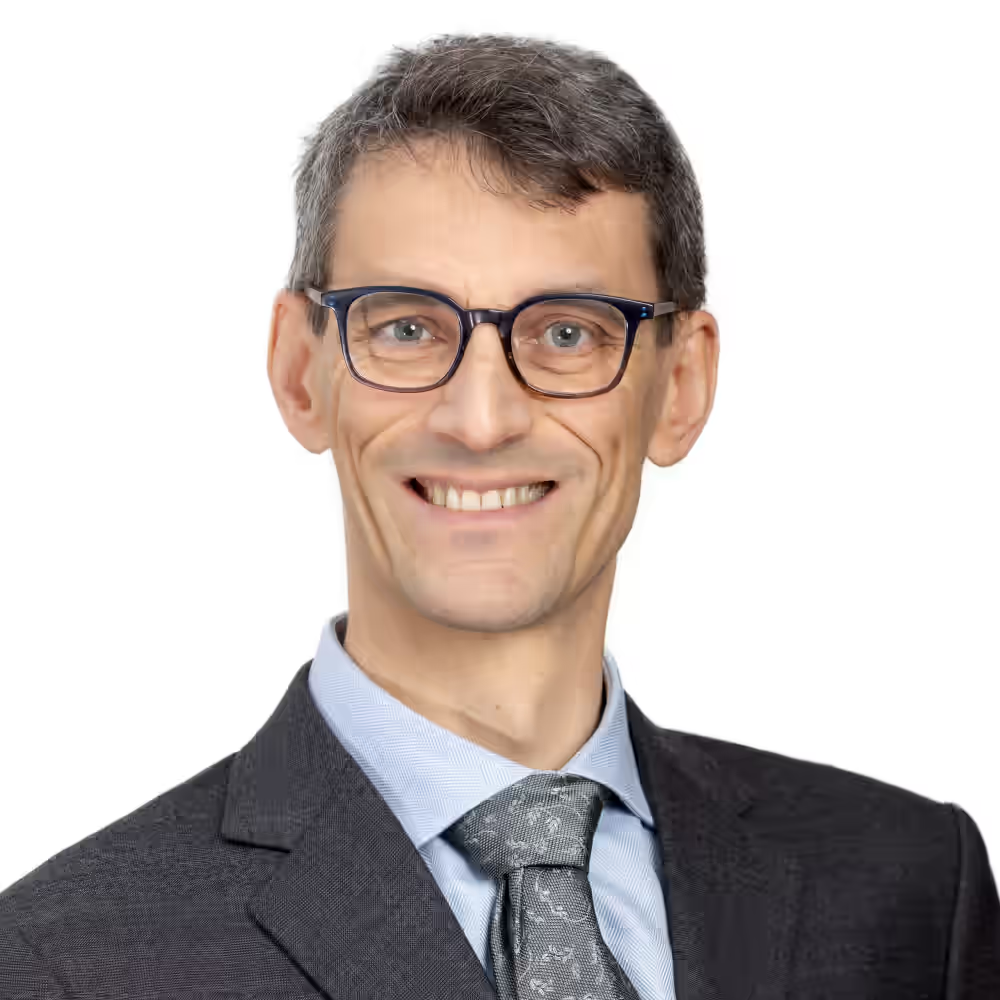
Erik Zeitler is a co-founder of Stream Analyze and a database systems engineer focused on real-time analytics on constrained edge devices. He holds a Ph.D. in Computer Science from Uppsala University, with research contributions to large-scale data stream processing. Before founding Stream Analyze, he led data infrastructure architecture at Klarna, enabling real-time risk and fraud systems at scale. Erik’s work spans academia and industry, with deployments ranging from cloud platforms to heavy-duty industrial vehicles.
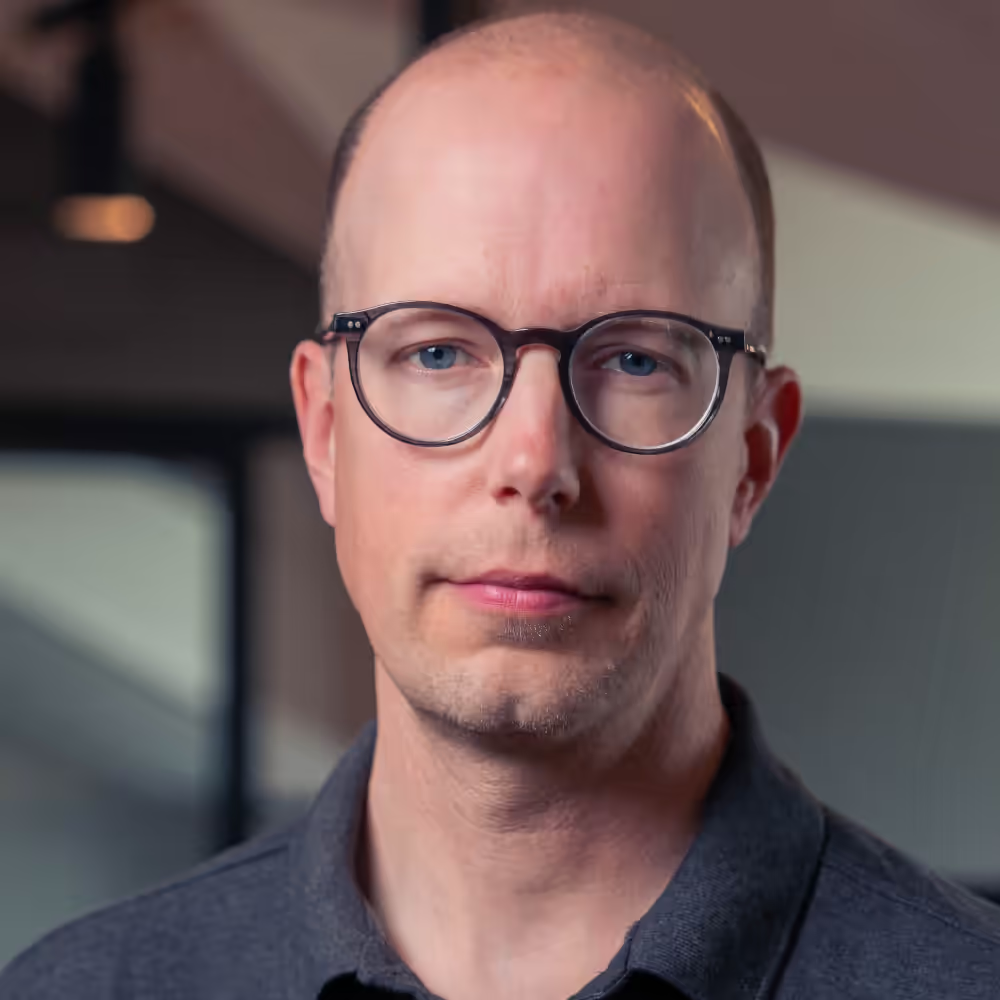
Magnus Gedda (PhD) works with product and customer implementations at Stream Analyze, a deeptech startup building an Edge AI platform for industrial applications. His career spans deep-tech startups, computational geometry, and computer vision, from building real-time object detection models to driving customer implementations and ISO certification work. He holds a PhD in digital image analysis from Uppsala University.


