Talk
Towards Zero Faster Using Deep Learning
Thursday 7 April 2022, 15:55–16:20
Main track
Watch the recordingFrom the recording
Erik Coelingh, Zenseact, presented the company’s aim of zero collisions, “towards zero faster”, against the 1.3 million people who die on the world’s roads each year. Zenseact, with about 600 engineers, most of them in Gothenburg, grew out of Zenuity and the active-safety work at Volvo Cars, and was developing OnePilot, software for driving, cruising, and riding, with Volvo Cars and Polestar as its lead customers.
He described the shift from cars defined by their hardware to cars defined by software, with cameras, radars, lidar, and powerful compute fitted as standard, and Zenseact’s decision to do all perception and deep learning in-house, “from pixel to torque”, so that the full software stack is built several times a day instead of every few months. Most of the investment went into data and into a tool chain that produces networks at industrial scale, rather than into network design: data collected around the world, automated annotation pipelines, and an on-premises farm of 160 GPUs. His examples included 3D bounding boxes from a single camera, trained with lidar data, lane detection, holistic path prediction, free-space estimation, and lidar object detection built by three or four engineers in a few months. Once the software is in production, data from the fleet will guide each new iteration, starting with traffic-jam driving on highways in California.
In the questions, he argued that unsupervised driving needs lidar, since cameras and AI still have limits, and that differences in driving behaviour between countries matter more for self-driving than for collision avoidance.
Speaker
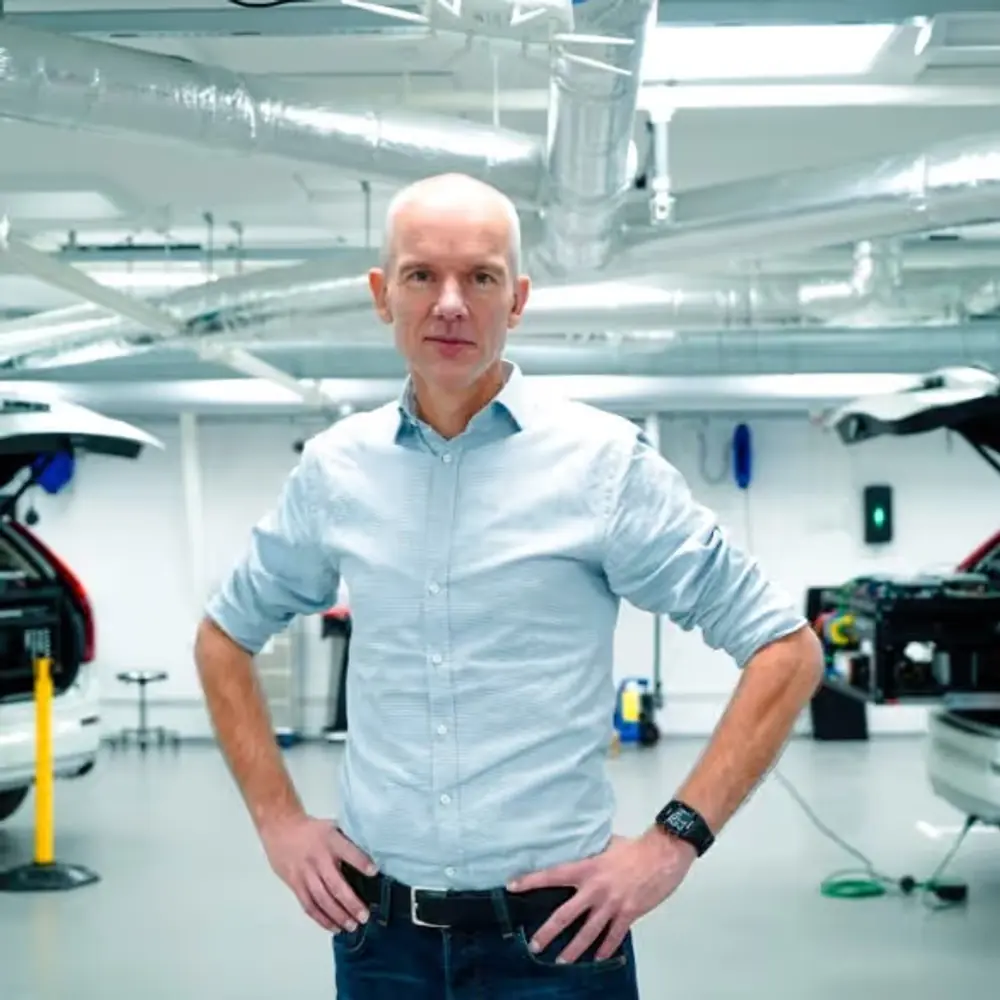 Erik Coelingh
Vice President Product, Zenseact
